
The Trade Gap Map: Which U.S. States are Facing the Sharpest Workforce Shortages?
The skilled trades crisis isn’t a distant threat—it’s a local reality. While the entire country feels the pinch, new research shows that the “severity” of the trades gap varies wildly depending on where you live.
The Volume vs. Severity Divide
When looking at the numbers, we have to distinguish between total job volume and workforce severity.
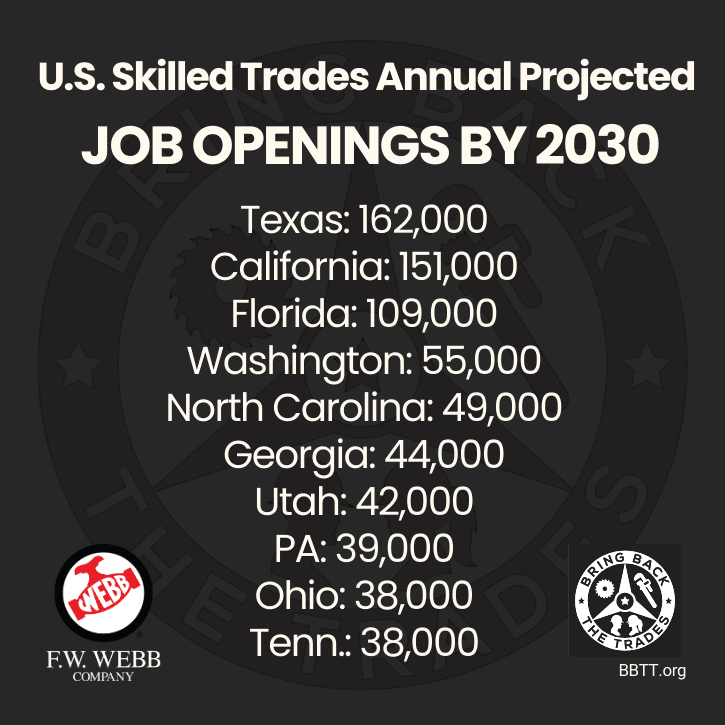
- By Volume: Large states like Texas (162k gap), California (151k gap), and Florida (109k gap) are projected to have the highest number of unfilled positions by 2030.
- By Severity: This is where the warning lights flash brightest. Utah leads the nation with a staggering 50.4% gap rate. Other states like Idaho (40.8%) and Montana (37.7%) are seeing their workforces hollowed out relative to their population size.
Note that despite the variances in the level of severity, there is a workforce challenge apparent in every state across the nation.
Why Severity Matters
In states like Utah or Mississippi, a high severity rate means project delays aren’t just possible—they are inevitable. When 1 in 2 required jobs goes unfilled, the “wait time” for a plumber or a new road project doesn’t just double; it can grind local development to a halt.
Regional Highlights: The Largest Deficits
- Mountain Region: Home to the highest severity rates (Utah, Idaho, Montana).
- South Atlantic: Georgia leads here with a 32.8% severity rate.
- Pacific: Washington and Oregon are facing gaps near 30%.
- Largest deficit: state – by volume:
- Texas: 162,000
- California: 151,000
- Florida: 109,000
- Washington: 55,000
- North Carolina: 49,000
- Georgia: 44,000
- Utah: 42,000
- Pennsylvania: 39,000
- Ohio: 38,000
- Tennessee: 38,000
- Largest deficit: state – by severity relative to workforce size:
- Utah: 50.4%.
- Idaho: 40.8%.
- Montana: 37.7%.
- Wyoming: 34.5%.
- Georgia: 32.8%.
- Mississippi: 31.8%.
- Oregon: 30.4%.
- Tennessee: 30.1%.
- Texas: 30.1%.
- North Dakota: 30.0%.
The Takeaway: Whether it’s a lack of installers in New England or a welder shortage in the West South Central, every region is losing out on tax revenue that funds schools and roads.